Sunday, January 08, 2006

A Home Boom Busts

Which housing market do you think these statements are referring to?
"a doubling of prices in the previous three years"

"a run-up fueled by massive speculation"

"at least 30% to 40% of homes sold were bought by speculators"

"Ordinary people had no option but to follow the trend; worrying that prices would be even more unaffordable tomorrow, many of them borrowed from relatives and banks to buy as soon as possible."

People sleeping in lines over night for the chance to buy a property.

"[so-and-so] believed she was raking in hundreds of dollars a day for doing nothing, as property prices in the city kept soaring."
Sounds familiar, right? Is it Florida? Boston? San Diego, San Francisco? Wrong, wrong, wrong, and wrong. It's Shanghai, China (and here). Their housing bubble is not described as being in "a soft landing", a "hiss/leak" or whatever, but rather as "popping".

Now, to be fair and unlike other eager-beaver bubble bloggers who are reporting on this article, I am not going to draw any strict comparisons between China's housing bubble and ours. Why? Because of the fact that the Chinese government seems to have deliberately tried to pop their bubble:
Banks were ordered to raise their best rate on home loans to 5.5% from 5%. Home buyers were required to make down payments of at least 30%, up from 20%. A 5.5% capital gains tax on home sellers' profits was imposed. Beijing also levied a 5% tax on the sale price of homes sold before two years of ownership.
We have yet to see any concerted effort (of comparable magnitude to that of China's) on the part of our elected and appointed officials to reign in our housing bubbles as it seems as if our leaders want our bubbles to go on for as long as possible and then collapse of their own weight and then, after the damage has been done, get credit for "fixing" the problems. That way our leaders don't get blamed for having caused the pain of the popping even though intervening early would reduce the suffering the American public would experience as compared to waiting for the whole thing to blow on its own.

What interests me about this article is what is happening to the people in Shanghai as a result of the implosion of their bubble; it's only just begun for them and I think it is something we will eventually have to "look forward" to ourselves.
But it's not just speculators who have bailed out of the market. A lot of potential Shanghai buyers have been scared off by numerous reports of sinking home prices and desperate action by some owners.

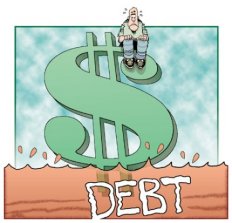
A Taiwanese man had jumped from the 33rd floor of an apartment tower about 15 miles northeast of downtown. Many people suspect that he killed himself because he was drowning in debt after his home investments went sour.

"Even a 1% drop in prices is a lot of money for us."

People losing their life savings.

The financial sector will be crippled by the real estate fallout

Regret with having got caught up in the housing frenzy

Saturday, January 07, 2006

A New Blog

There is a new blog on the block that will likely prove interesting. It's called "America's Most Over-Valued Real Estate Markets". Check it out. Here is what the blogger has to say about the Bay Area:

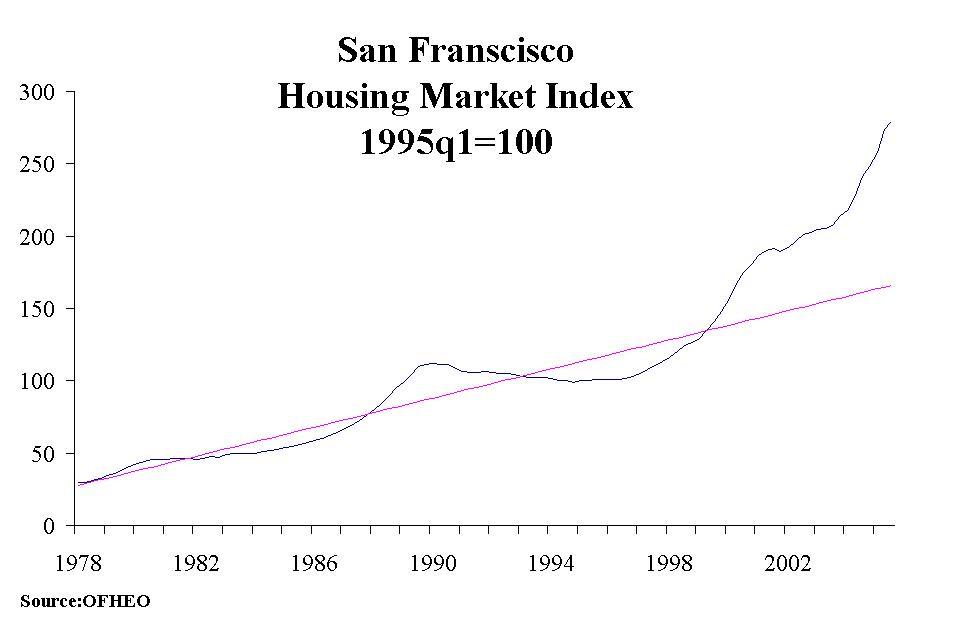
San Francisco started enjoying a bubble before most cities. Things took off in the mid-1990s and got a little out of hand with the internet bubble. Prices calmed down after the dot.coms exploded, but accelerated after the Fed started to cut interest rates. Over the last year or so, prices have been increasing almost vertically. However, San Francisco has been through it before. The 1980s bubble finally burst in 1989, and prices fell for about five straight years.
And I enjoyed one of his articles on a companion blog which summarizes the work of Hyman Minsky who identified seven stages of a financial bubble all of which sound too familiar.

Bay Area is 50% IO in 2005

Just a quick note: A reader brought to my attention this article in the SF Chronicle. Most of it is the typically bland and not very informative stuff. Until this that is:
Roughly 80 percent of home purchases in the Bay Area were financed using adjustable-rate mortgages...

San Francisco mortgage research firm Loanperformance.com found a whopping 50 percent of buyers in the Bay Area this year used interest-only loans, compared with 45 percent of borrowers statewide and 31 percent nationwide.

Friday, January 06, 2006

Piggington Does the Bay Area

Remember when I said that the SoCal housing market is not all that different from that of the Bay Area vis-à-vis the housing bubble and the lambasting I got for that comment? Well, Professor Piggington has done the comparison so see for yourself. It's nice to have corroborating analysis.
This suggests that Bay Area home prices have risen not on structural fundamentals such as population or income growth, but on more ephemeral factors such as optimism, over-ownership, speculation, and E-Z credit.

Top RE Salesmen in CYA Mode Again

I need a break from the crud I am having to deal with. So...

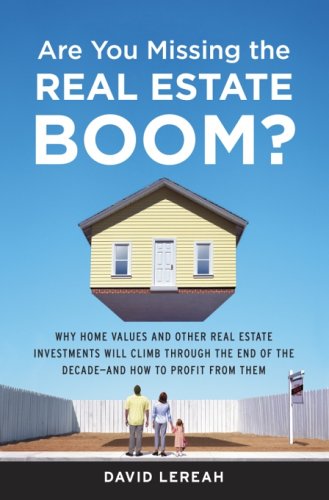
Well, David Lereah and David Seiders are still heavily in CYA mode (what ever happened to 'housing never goes down', 'it's different this time', 'houses are different from stocks, people live in houses', 'if you paid off your mortgage you're unsophisticated', 'not bubbles, just balloons'?):
"It's difficult to follow the strongest year ever," said David Lereah, chief economist for the National Association of Realtors trade group, which has about 1.2 million members. "The boom is obviously winding down. That's what we're all saying and observing." Existing-home sales should drop about 4 percent to 5 percent this year, compared to the 2005 levels, Lereah said, and new-home sales should drop about 5 percent to 6 percent year-over-year.

Price drops are possible in some "very, very hot metro markets," he added, though "it's very difficult to know which markets they will be right now." Nationwide, though, Lereah expects home-price appreciation to be up about 6.1 percent this year, compared to a rise of 13 percent in 2005.

Lereah said, "Investor activity is by far ... the biggest risk that the housing sector is going to face this year, because investor activity had gotten to levels that we had never seen before. And we are in uncharted territory." Speculators who bought properties to flip quickly may be left at a loss, as interest rates are rising and the market is in transition from a seller's market to a buyer's market.

David Seiders, chief economist for the National Association of Home Builders trade group, said, "I think the biggest risk would be for investors not only to stop investing, but to move those units back onto the market in large volume, and that could create a bigger problem. This is kind of new to us," he said, adding that it's a "major uncertainty" where investors would put their money if they pulled it out of the real estate market.

"All of us will be observing keenly," Lereah said. In March 2005, the Realtor trade group released a study that showed a high level of investor activity in the housing market: 23 percent of all homes purchased in 2004 were for investment, and another 13 percent were vacation homes.
What about all those people who "bought" houses to live in with "toxic" loans or did cash-out refis? Aren't they speculating too, betting on future greater-than-inflation price appreciation? And what happens when these marginal buyers are forced to add their houses to the existing inventory?

Wednesday, January 04, 2006

November Results for Marin

Thanks for the support. Yes, it is a serious emergency and it will keep me pre-occupied for some time.

So, I really have little time to blog or even think about Marin RE as I said in my previous post, but I received an email notification from West Bay Realty that I would be remiss to not pass along to you:

November's results for Marin County are out and they don't look good (not very surprising given all that has been posted here on this blog of late). SFH sales are off nearly -30% compared to this time last year. The median price of a SFH fell somewhat and year-over-year appreciation is now in the single digits but the average price increased (maybe someone could do a bar chart and verify that there are some high-end outliers). I would guess that only the nicer houses are selling and people are finding that they can now get more for their money; I suspect it will only get better for buyers.

Condo sales rose 38% from last month (that's not too surprising given how far off they were in October) but they are still down more than -20% compared to this time last year. West Bay RE describes the rise in condo sales as "soared" so I suppose to be fair that means the -20% sales figure should be described as "tanked".

I look forward to confirmation/adjustment of these data from the Marin Assessor's Office.

Watch out for the "dead cat bounce".

From West Bay RE:

Home sales in Marin County fell 24.1% from the month before, and were off 29.2% compared to November 2004. Along with falling sales came rising Days on Market. The time it took to put a home under contract increased seventeen days to 65.

The median price for single-family homes fell 1.3% from October to $935,000. The year-over-year appreciation was 4.8%. The average home price, on the other hand, gained 7.1% to $1,209,845, an annual increase of 11.3%.

The median price for condos rose 0.1% to $540,000, an annual gain of 10.7%. Sales soared, rising 38.1%% from the month before, but off 20.5% from last November.

Tuesday, January 03, 2006

Stuff Happens

There has been a family emergency and so I am neither inclined nor free to post very much. I will resume posting when I can.

Marinite